
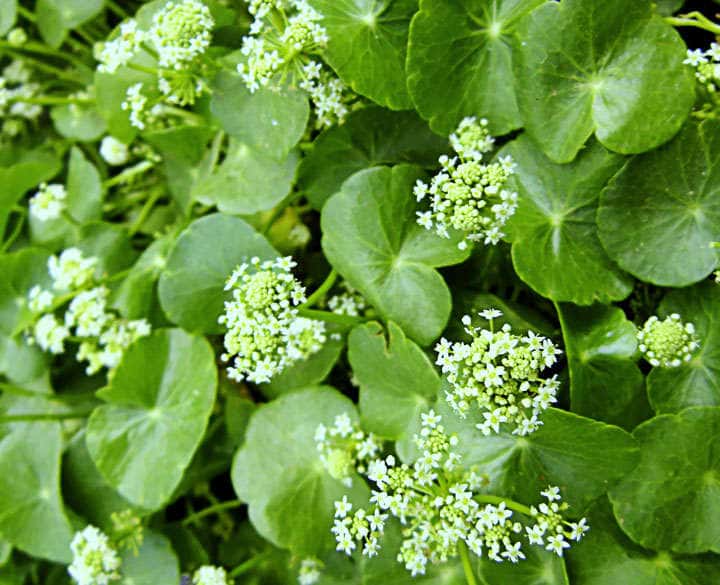
Centella asiatica is a plant with healing properties and health benefits for people. It is well known in Asia, and that is where its common name comes from. It belongs to the Apiaceae family and contains triterpenoids and saponins. Some of the most notable properties include improved wound healing and care for skin affected by psoriasis and eczema. It is known as “gotu kola” and has other uses and applications that we describe below.
Contents
Properties of centella asiatica
Used to prepare multiple remedies, it is a medicinal plant used in Chinese and Ayurvedic. Thanks to its high saponin content, it promotes tissue healing, largely preventing marks from remaining on the skin afterward. It encourages fast and effective healing, restoring healthy tissues of the epidermal layers.
It has beneficial effects on anxiety. It depresses the central nervous system and reduces difficulty sleeping, thereby reducing symptoms of insomnia.
Taking centella asiatica regularly raises levels of collagen for the skin and increases the overall amount in the body, which helps slow the appearance of facial wrinkles. This results in better elasticity and a younger, firmer appearance.
It promotes blood circulation, which is closely linked to the increase in the production of collagen proteins. These proteins contribute to hair formation, making it stronger and healthier. It also adds thickness to weak nails. In people affected by arthritis, it can produce positive results due to increased collagen. Supplements containing collagen proteins or that promote their production by the human body are highly recommended for joint problems and degenerative diseases such as rheumatism.
Likewise, it can have an effect on varicose veins by stimulating circulation. In the legs, there is a greater predisposition for blood flow to be limited. Centella asiatica, by stimulating blood flow, helps people who tend to develop varicose veins and spider veins.
 It regulates blood glucose levels. This is very important for diabetes.
It can also have beneficial effects on autoimmune diseases or conditions that cause immune system deficiency, such as scleroderma. It acts by reducing the pain and discomfort these conditions produce in patients.
Its diuretic properties improve kidney function and reduce fluid retention. This characteristic can be beneficial for arterial hypertension, since in many treatments herbs and plants are used as diuretics to reduce the diastolic and systolic blood pressure as part of antihypertensive treatment and in patients with heart failure.
Its properties are:
- Antipyretic action or fever reduction.
- Helps wound healing.
- Remedy for lack of menstruation or amenorrhea.
- Improves symptoms of diarrhea.
- Increases natural collagen production.
Contraindications and side effects
When taken orally, there are no described undesirable effects or significant reactions when used sporadically. Pregnant women and women who are breastfeeding should avoid its use, as should children. Even so, some people may experience:
- Headache.
- Lower blood sugar levels.
- Allergic reactions from both topical and oral use.
- Stomach discomfort and nausea.
- Temporary memory loss caused by high doses.
When centella asiatica is used in cream form, it can produce side effects such as dermatitis, and it is necessary to avoid prolonged use since it may affect the liver.
Pregnant women should avoid its use due to its emmenagogue properties. It can promote menstruation and blood flow in the pelvis and uterus, potentially causing abortion. Likewise, if you are trying to become pregnant, you should also avoid its use, as there are indications that it may reduce fertility and the chances of conception during use.
What do centella asiatica capsules contain?
The extract used to manufacture each capsule comes from the dried aerial parts of the plant. It is obtained by crushing leaves rich in saponin triterpenoids—between 6% and 7%—and asiatic acid, which is found, for example, in blatoestimula cream, widely used to heal wounds. This active principle is very valuable and is by far the most highly valued component of the plant. The European Medicines Agency (EMEA) itself recognizes it as such.
It also contains other saponins such as:
- Brahmanoside
- Braminoside
- Indocentolloside
- Isotankuniside
- Madecassodi
- Tankuniside
 It also contains a small portion of essential oils and flavonoids such as quercetin, which have antimicrobial, anticancer, and heart-protective properties. Today, many supplements and dietary products include flavones to improve their action and enhance overall health.
Benefits of eating it
Just as you can take it in capsules, you can also use this medicinal plant by eating its leaves. In China, salads are prepared because they help prevent ulcers, neurological degeneration, and support a younger organism. Its antioxidant properties can be obtained both by eating raw centella asiatica and by using dry extract in tablets. In addition, its healing, antimicrobial, and immune-system-enhancing effects are highly valued.
Creams and lotions
Because it affects the circulatory system, it can be used as a remedy for cellulite. Centella asiatica in cream is the active principle of blastoestimulina ointment and ovules, used as healing agents and tissue regenerators for the skin and for treating vaginal conditions.
Because of its effects on the circulatory system, it can also be a remedy for cellulite. Centella asiatica cream helps eliminate localized fluid when applied and absorbed by the skin. There are different cellulite creams containing varying percentages of this plant and its active principles, although the most well known are healing formulations.
These are recommended to heal wounds and speed up healing, although there are also specific products focused on reducing adipose tissue associated with cellulite. Centella asiatica cream is effective, and many people, including medical professionals, report positive opinions. Good examples include anti-stretch mark creams and cellular tissue repair creams for the skin. Also well known is Muvagyn gel, which is a moisturizer used to restore the vaginal mucosa during menopause, after childbirth, and in other situations involving dryness.
You can buy centella asiatica capsules or cream in sizes of 50 ml or 200 ml. Different formats and specialized brands are available to achieve different results for the epidermis and its care.


I have been taking centella asiatica capsules for three years, and I have felt very well. Thank God, I have a history of HPV, and since then all my checkups have been negative. Thanks to God and centella asiatica, I also sleep very well. I am 53 years old, and when menopause arrived, I did not even notice it..
That’s great, Maritza. It usually works quite well and helps with falling asleep. For menstruation and menopause, it also provides benefits, as you indicate. Thank you very much for sharing your experience. Keep it up.
How many milligrams per day do you take? Here in Chile, the information is a bit confusing. They sell 30 milligram capsules and recommend taking two a day. There are also 500 milligram capsules, and they also recommend taking two a day. Do you know anything about this? Thank you.
How do you take centella, and every how many hours?
For people with thrombocytopenia, is centella asiatica advisable?
Hello Beatriz, there are no described interactions or contraindications between centella asiatica and thrombocytopenia. Be cautious anyway, and if possible, consult your family doctor.
Hello, in the contraindications you mention a reduction in fertility. Although you indicate that this occurs during use, I wonder whether prolonged consumption affects fertility in this regard. I have been taking centella asiatica for some time, and although I do not plan to become a mother yet, I would like to in a year and a half or two. Thank you.
To what degree of penetration does centella asiatica reach?
It seems very good. Does it help with the stomach, and what dose should I take in capsules?
The information about centella is very interesting. I have been taking it orally for about a month. However, after thinking about it, I would like to know whether a standardized centella asiatica extract can be applied to the face. I have marked wrinkles on my forehead, and I am applying it, although I do not really know whether it will work. But if it helps with scars and stretch marks, it may help me somewhat.
Good morning. I have been taking pure liquid extract of Centella asiatica for two months. I have hypothyroidism. I have started to feel cramps or body aches, like when a fever is about to start. I ask: could this be a side effect of taking centella? I take 80 drops per day on an empty stomach. Thank you.
Hello, can it be added to mate tea? A few leaves?
Can it be used in creams during pregnancy? Thank you.
Can centella asiatica delay the menstrual cycle? I have been taking it for one month.
Hello, I am a type 2 diabetic. Can I take centella asiatica?
I had hip surgery one month ago, and the doctor recommended centella asiatica for healing. However, my foot has red spots and pain. Could that be the reason, even though I only apply it to the hip?
I have fibromyalgia. Can I take centella asiatica in pearls or capsules? I also entered menopause two months ago. What dose can I take per day?
I have started taking centella asiatica in capsules today. All the comments I have read have been positive, but I would like to know whether my husband can take it, since he has type 1 diabetes. Thank you.
I bought the cream for cellulite and varicose veins. If I take anxiolytics, can I use it? Thank you.
In principle, there are no contraindications to using a cream while taking anxiolytics or tranquilizers. The mechanism of action of centella asiatica when used topically is localized, meaning it acts only on the area where it is applied. It should not interact.
Hello, I have been taking it for about a month and a half. What I need to know is whether the contraindication regarding liver damage is true, because I read about a woman, Maritza Lugo, who has been taking it for three years. So does it cause harm or not? That is my question.
Please, I currently suffer from erosive gastritis and esophagitis. Could centella asiatica benefit me for this condition? On the other hand, I need to take a diuretic due to a heart condition. It seems like a good option to me, and I appreciate your recommendations.
Hello, for how long should centella asiatica be taken continuously?
Hello, regarding the cream, are there any contraindications for people who have lupus?
Hello. I started taking it, and it helped me a lot with hemorrhoids. However, I would like to know whether I can combine it with hyaluronic acid, because I started centella during the rest month from the acid. Can I take both?
Hello. Does centella asiatica combined with vitamin E reduce the effect of contraceptive pills? Thank you.
It should not, but the interaction list of the contraceptive should be reviewed. Ask at the pharmacy where you buy it so they can confirm it for you.