
Glycogen is a polysaccharide present in gluconeogenesis and released when the body needs energy. It is stored in large amounts in muscle fibers but also in the liver and other parts of the human body. It meets the demand when there is a sudden change in activity and during prolonged exercise.
Contents
- 1 What glycogen is and its function
- 2 Relationship with adenosine 5 monophosphate
- 3 Types of glycogen
- 4 Differences between muscle and liver glycogen
- 5 Metabolism of fructose and glucose
- 6 Foods to restore glycogen
- 7 Add pyridoxine or foods containing vitamin B6
- 8 Does taking glutamine work to increase it?
- 9 Improve glycogen storage with L-carnitine
- 10 Glycogen to glucose through glycolysis
- 11 Gluconeogenesis
- 12 Why is it so important in sports?
What glycogen is and its function
It is related to branched-chain amino acids necessary for muscle function and participates in the process of glucose assimilation. It is branched, which allows glucose molecules to be present in large amounts, making it easier for them to be metabolized at different rates by enzymes called “glycogen synthase” and “glycogen phosphorylase”.
The function of glycogen is:
- To store carbohydrates as a reserve in the body.
This organic storage allows the body to maintain effort when energy reserves are required. It is also present in animals, and the proportion of storage in humans, or where glycogen is found, is: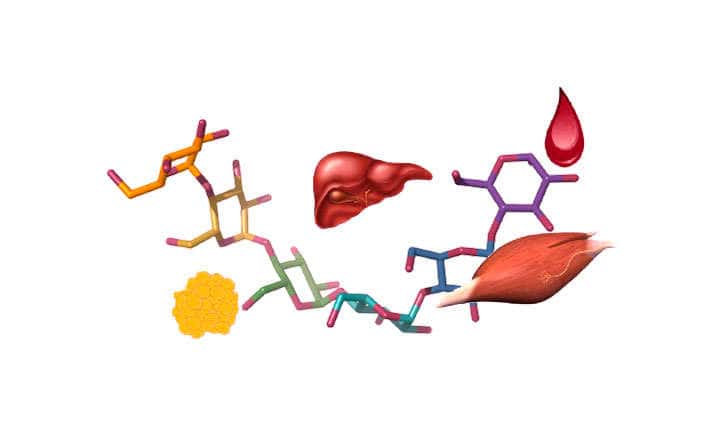
- 10% of the liver mass.
- 1% of total muscle tissue.
- Other areas such as the brain in a small percentage.
Everything is stored in the vacuoles of the cytoplasm of the cells, which make it available for glycolysis, the process by which cellular energy is generated by transforming it back into glucose.
In general, a healthy person has approximately one percent glycogen within their total muscle mass and ten percent within the structure of the liver. For athletes and for people in general interested in understanding this topic in more depth, it is important to know these differences.
Relationship with adenosine 5 monophosphate
This type of molecule regulates energy transfer in the body, so it is closely related both to this process and to adenosine triphosphate, also called ATP.
The stimulus to convert glycogen into glucose comes from this molecule, that is, adenosine 5 monophosphate regulates blood glucose levels as well as some steroids, fats and triglycerides. It intervenes in the mechanism that synthesizes the enzymes responsible for degrading the polysaccharide during glycogenolysis.
Types of glycogen
- Muscle.
- Liver.
Muscle glycogen
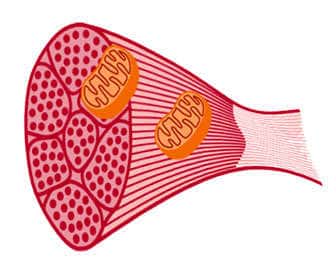 It is the fuel of the muscle and is essential for performing any type of physical activity. Special attention must be paid to it during sports activity, as it is very important to maintain muscle glycogen levels.
Its role in muscle tissue is to provide the primary source of energy, allowing muscle contraction.
Liver glycogen
It undergoes a series of transformations to become blood glucose through the action of adrenaline and glucagon. Both hormones are very important for the body and overall health. This is the main source of blood glucose when we are eating, so it is vital for remaining active.
Differences between muscle and liver glycogen
Basically, muscle glycogen supplies energy to the muscles, while liver glycogen supplies the rest of the body.
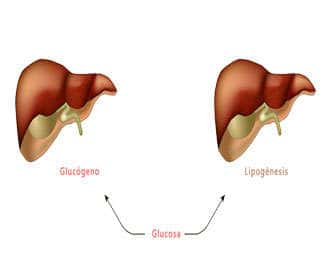 Its function is to store carbohydrates in order to provide energy during periods of increased physiological demand. The greater the amount of muscle mass, the greater the body’s capacity to store carbohydrates in the form of muscle glycogen. However, with greater muscle mass, these reserves are also depleted more quickly. This is not negative. When there is a high capacity to convert glycogen and glucose, the probability of converting carbohydrates into fats is lower, so you gain less weight.
On the other hand, liver glycogen levels are more or less the same in all people, with some exceptions.
Approximately 50 g are present in the liver. Any excess is also converted into body fat. The difference between muscle and liver glycogen is that the former serves as a local energy source at the site where it is stored. Muscle glycogen supplies the muscle, while liver glycogen supplies the blood and therefore the entire body.
Metabolism of fructose and glucose
This is where the differences can be examined in greater depth. While fructose is metabolized in the liver and stored in the form of glycogen, glucose passes through this organ and is sent to skeletal muscle, where it is processed to produce CO2, H2O and ATP and generate energy. One is composed mainly of fructose and the other of glucose from foods. Therefore, it is useful to understand which of them should be consumed.
Foods to restore glycogen
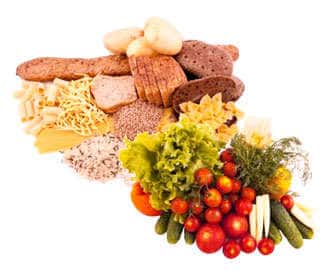 After this description, you should be aware that the type of foods you consume in your diet is important. If you eat foods rich in glucose, you will restore muscle glycogen levels, and if you eat fruit, liver glycogen levels.
Obviously, the amount stored corresponds to the capacity of each individual. Any excess, as mentioned previously, will be discarded and transformed into localized fat. Now let us look at glycogen in foods:
Foods for muscle glycogen:
- Rice.
- Pasta.
- Potatoes.
- Sweet potatoes.
- Oats.
Foods for liver glycogen:
- Fruit.
- Honey.
- Cereals.
- Corn syrup.
- Fructose-based sweeteners.
Depending on the lifestyle you lead, whether you engage in a lot of physical activity or are sedentary, you will need to increase the consumption of fresh products and foods of one type or the other.
Add pyridoxine or foods containing vitamin B6
At the same time that some of these foods have been indicated as examples, foods with vitamin B6 are also important, or taking a supplement with pyridoxine if your diet is poor in vitamins. This vitamin, called “B6,” is essential to promote its release. When it is present in adequate doses, the release of glycogen increases, which in practice results in greater efficiency and metabolic energy flow.
Does taking glutamine work to increase it?
 Another fundamental element for increasing the capacity to generate this polysaccharide is glutamine. Through the addition of a 500 mg or 1000 mg L-glutamine supplement, the amount of glycogen produced and stored is greater. Including it in the diet therefore favors higher reserves of this element if you maintain a high training intensity.
For people who are not athletes, this is not necessary, as glutamine consumption will be low under normal conditions, and muscle glycogen is not depleted except in exceptional situations.
Improve glycogen storage with L-carnitine
Another widely used supplement is known for its role in the burning of fatty tissue and in the utilization of foods. It directly affects fat metabolism. A small amount of carnitine improves the transformation of localized fat into energy and also the way it is absorbed. In addition to facilitating weight loss, it also helps improve training performance. If you want to learn about this molecule in more detail, as well as know where to buy pure L-carnitine to improve your training, follow our advice.
Glycogen to glucose through glycolysis
When the body needs energy, stored glycogen is transformed into glucose so that cells can be nourished. Through glycolysis, the vacuoles, which are compartments of the cells, release their contents, and the enzymes involved perform hydrolysis, leading to the formation of glucose again.
Gluconeogenesis
The synthesis of glycogen from glucose is called “gluconeogenesis.” This organic chemical process is carried out by a enzyme called glycogen synthase. For this, two high-energy bonds are necessary: one from ATP and the other from UTP.
Why is it so important in sports?
When performing physical activity for a long period of time, as occurs during running, swimming, cycling, and other endurance sports, glycogen stores decline. These reserves are transformed and used to meet cellular and muscular energy demand. To avoid physical exhaustion, gels containing carbohydrates and caffeine can be used.

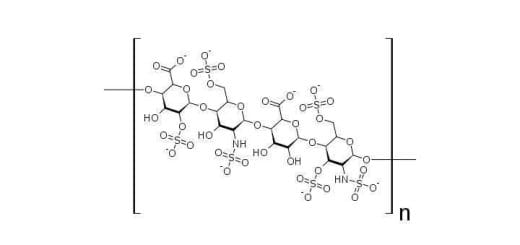

Gluconeogenesis: It is an anabolic metabolic pathway that allows the synthesis of glucose from non-carbohydrate precursors. It includes the use of several amino acids, lactate, pyruvate and glycerol.
Glycogenogenesis: Glycogenogenesis, or glycogenesis, is the anabolic pathway by which the synthesis of glycogen occurs from a simpler precursor, glucose-6-phosphate. It occurs mainly in the liver and to a lesser extent in muscle. It is activated by insulin in response to high blood glucose levels, which may occur, for example, after the intake of carbohydrate-containing foods.
Thank you very much for the observation, Merche.