
The hydrogen peroxide (hydrogen peroxide solution) is an oxidizing agent that has uses as a disinfectant, a tooth whitener, for the treatment of pool water and to preserve food. Its properties are oxidizing and reducing.
This chemical compound is very volatile. It has the ability to react abruptly when it comes into contact with other substances and materials, but when used properly, it has many applications.
For example, in dentistry, it is the main compound used for dental whitening, and in its hydrogen peroxide solution form, it is used to sterilize medical instruments needed in operating rooms and thus disinfect them, in addition to being very useful for cleaning wounds and bleaching hair.
Hydrogen peroxide has many properties, so in this article we will explain them all, also describing its formula and how it is obtained.
Contents
What is hydrogen peroxide
Known as hydrogen peroxide solution, it is a translucent liquid formed by molecules of hydrogen and water. It is known by several names such as “Dioxidan” or “Dioxogen”.
Its odor, although not too strong, quickly penetrates the nasal passages and produces some rejection.
As it is an oxidizing liquid, it has many uses in the chemical and dental industry to whiten teeth, but it is also used in medicine and cosmetics due to its antiseptic and skin whitening properties.
There are several grades of hydrogen peroxide, the types, depending on its chemical composition and dilution with other substances, degree of purity. Therefore, we are going to look at the types that are marketed so that you can have complete information about this chemical compound and its most common applications.
Uses
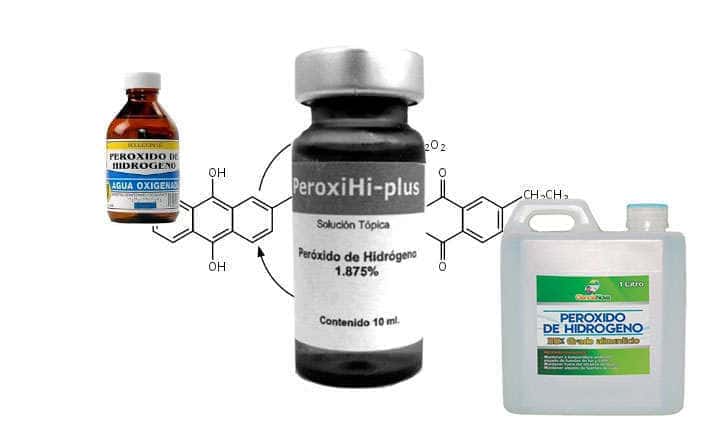
Given its properties and benefits, it has multiple applications. The uses of hydrogen peroxide are:
- As a disinfectant in agriculture and medicine.
- As a treatment for pool water.
- As a hair bleaching agent.
- As a dental whitener in dentistry.
Depending on the version and purity, its use is viable in agriculture, in cosmetics, or in water treatment.
Disinfectant
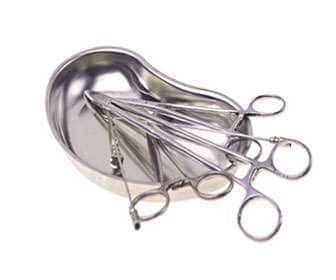
The most common use of hydrogen peroxide is as a high-level disinfectant in hospital management, as well as for treating floors and culture media environments.
It has disinfectant properties, which makes it suitable for eliminating bacteria and microorganisms from materials used in medicine, both solid instruments and liquids that are intended to be disinfected with its antiseptic action.
Hydrogen peroxide for sterilization works as a low-temperature biocide, being a frequent alternative to sterilization with ethylene oxide.
In medicine, it serves as an agent to sterilize medical instruments and materials that are sensitive to moisture and thermolabile. Its effects occur within one hour, instead of the 24 hours required when ethylene oxide is used to complete disinfection.
Food grade 35
In the food industry, it can be used when its purity is partial. Food-grade hydrogen peroxide is known as hydrogen peroxide 35 or 3.
With this chemical formula diluted to reduce its grade, it has a purity of 35% and works to preserve food without the risk of proliferation of microbes and pathogenic bacteria that can damage food.
In Spain, it is widely used and is one of the best-selling chemical compounds in the country’s chemical industries. It is easy to purchase in small quantities and in large batches.
For teeth whitening
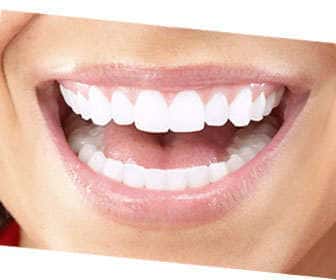
Hydrogen peroxide is used to whiten teeth, but care must be taken with its use since it can damage tooth enamel, leaving the tooth or molar where it has been applied unprotected.
It is very common to find it as an ingredient in dental whiteners and as an oxidizing substance to achieve a better color in the dentition. Hydrogen peroxide is commonly used by dentists and clinics that treat oral aging.
As it is an oxidizing agent, it removes dirt from the tooth, but if its application is prolonged, it can destroy the enamel, reducing the quality of the dentition. For teeth whitening, carbamide peroxide is also used. The properties of both compounds on teeth are discoloration, removing yellow coloration or stains caused by tobacco and coffee.
It is recommended to always use it with caution since its effects are in most cases irreparable. Extreme care is required when it is used as a home dental whitening treatment.
Agriculture
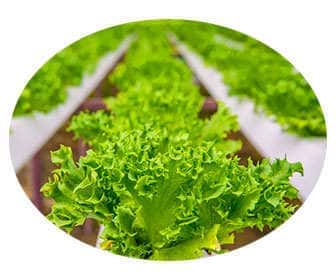
In the cultivation of vegetables and in soil treatment, hydrogen peroxide in agriculture has a very important function.
Regulated by the Ministry of Agriculture of Spain and the European Union, the chemical compound acts on the catalase enzyme. This produces the decomposition of H2O2 (hydrogen peroxide formula) into one molecule of oxygen and one molecule of water.
The catalase enzyme is present in living organisms, so its action begins when they come into contact with hydrogen peroxide.
The applications in agriculture are mainly to disinfect the soil and eliminate anaerobic microorganisms, bacteria, fungi, and molds that cause the rot of fruits, vegetables, greens, and crops in general.
Hydrogen peroxide works well in agriculture, leaving no residues and producing no food or environmental contamination. It helps protect plants from pathogens and biological contaminants.
In addition to agricultural uses, hydrogen peroxide in agriculture is used to:
- Prevent the proliferation of algae in irrigation water.
- Eliminate bacteria and pathogens such as Pythium.
- Kill viruses, fungi, and spores that can damage plants intended for food production as well as ornamental plants.
- Disinfect materials used in cultivation such as pots, pipes, and harvesting tools.
- Destroy pesticides, herbicides, and decomposing organic matter.
- Remove chlorine from water so that plants receive more suitable water.
- Stimulate foliar growth, leaves, and new shoots of vegetables.
- Increase the germination rate of old seeds.
- Prevent the formation of calcareous or lime-based residues.
In agriculture, hydrogen peroxide is considered a Type 5 Biocide, that is, a water disinfectant suitable for human consumption, classified in Order SAS/1915/2009 on substances for the treatment of water for human consumption and included in Standard UNE-EN 902:2000 in compliance with Spain’s R.D. 140/2003, which establishes the health and safety criteria for the quality of water for human consumption.
Hydrogen peroxide at 3, 5, 8, 17.5, and 35% has low phytotoxicity, is biodegradable, does not alter the organoleptic properties of the harvest, and its decomposition is ecological. It generates no residues.
Its spectrum of action in agriculture is broad and effective across many pH values.
An alternative to hydrogen peroxide, although it is not exactly the same, is the so-called copper oxychloride, which works as an ecological fungicide.
For pools
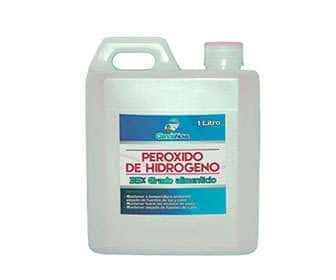
As it has disinfectant and biocidal properties, it is suitable as an ecological product for water treatment, functioning as a chemical to produce potable water and as an element to keep the pool clean.
Hydrogen peroxide for pools works to eliminate excess chlorine that damages human skin and mucous membranes. It can be applied in ponds, reservoirs, and in community or private pools. In fact, any type of recreational area with stagnant water can be treated with hydrogen peroxide.
Because its action is antioxidant, it releases oxygen from the water through the following chemical reaction:
- H2O2 –> H2O + 1/2 O2.
The release of oxygen in the hydrogen peroxide formula (H2O2) is fundamental, producing a rapid reaction that eliminates chlorine from the water while maintaining the rest of the elements such as isocyanuric acid.
However, for this purpose, it is necessary to calculate the dose correctly or determine the quantities needed to treat the water, so below we indicate how it should be used.
How to use hydrogen peroxide for pools
- Add 0.75 liters of hydrogen peroxide for every 50 m3.
- For the treatment of stagnant or contaminated water, it is necessary to add 1.5 liters for every 50 m3.
- As a periodic treatment, pour 2 liters of hydrogen peroxide for every 50 m3. It is important to repeat every 7 days.
Take into account the instructions of the brand you buy. There may be some differences in dosage depending on the distributor and the container, taking into account the purity of the compound. The ideal option is to buy peroxide for pool use or specifically for water treatment, since otherwise its grade could be different and the dosage as well.
For pool use it is common to buy it in tablets or liquid form. Generally, hydrogen peroxide tablets are much simpler and more convenient to use, making it easier to measure the amounts that must be added. These must be placed in the filtration system and are often sold as active oxygen tablets.
Gel for toothpaste
In dentistry, hydrogen peroxide gel is used as an ingredient to manufacture whitening toothpaste. Many brands include it in toothpastes and mouthwashes, since it helps remove dental dirt. In addition, some people prepare it at home.
What is important for domestic use is that its concentration is between 10% and 20%. Never exceed this level, since it could be harmful and produce side effects of various kinds.
For the manufacture of dentifrices, it is also necessary to add Carbopol 940, which is a gelling agent, to make the gel. It is also necessary to include anhydrous glycerin in the mixture.
The compounds included in homemade toothpaste prevent the dissolution and elimination of carbamide peroxide, which is the type of peroxide used as toothpaste.
Catalase and hydrogen peroxide
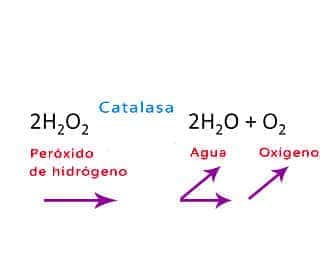
Because the function of catalase is to neutralize H2O2 molecules so that they do not produce toxicity in the organism, diluting it in water produces a chemical reaction that releases oxygen from the water.
At the moment when oxygen is released, it becomes very reactive and can bind to other atoms to form stable oxygen. Subsequently, the peroxide oxidizes other organic molecules, disinfecting the water from microorganisms.
The formula for the reaction of catalase and hydrogen peroxide is the following:
- 2H2O2 –> 2H2O + O2.
This formula indicates the reaction that produces the elimination of anaerobic organisms, which do not need oxygen and cause most of the damage in crops and in stagnant water.
To finish, we are going to explain a fairly frequent question, which is whether hydrogen peroxide is the same as hydrogen peroxide solution.
Is hydrogen peroxide hydrogen peroxide solution?
At the beginning of the article, we have already indicated that it is the same.
If we look at the chemical formula of both chemical compounds, we can verify that they are the same, that is, that hydrogen peroxide is hydrogen peroxide solution. Both have the formula H2O2, and this unequivocally shows that it is the same substance.
In many cases, the confusion comes from the different degree of purity, that is, being more or less pure, it can react in a different way, which is why many people come to think that they are different, but nothing could be further from the truth.
Another reason why there is confusion is the commercial name. While it is known as hydrogen peroxide in agriculture, dentistry, and for water treatment, for use on the skin it receives the name hydrogen peroxide solution. But without any doubt, it is the same compound.
Can I disinfect fruits and vegetables for human consumption, and can I clean tap water that contains a lot of chlorine?
It works as a disinfectant, but to clean fruit you have to add a relatively large amount, so it is not usually used for this purpose.
If we mix hydrogen peroxide, permanganate, and soap, the result is a hot foam, or at least that is my understanding, and it also cannot be inhaled. Is that true? If it is, how can I do the experiment in my living room without causing any damage? I need to do it.