
Glutamic acid is a precursor to the amino acid glutamate. It helps stimulate neuronal receptors and can be produced naturally in the human body, but it can also be added as part of a nutritional supplement to improve nutrition and support proper body function. Therefore, it is not an essential nutrient, but it is extremely important for maintaining good health.
Glutamic acid properties
We can find it in each and every one of the cells in the body, but only some use this type of acid: those that need it as a neurotransmitter.
One peculiarity is that although it is incredibly necessary for cells and glutamate receptors, it is very toxic when its concentration rises, so the human body has a mechanism to ensure that it always remains at the necessary level. Excitotoxic substances must be monitored and kept under precise control.
It also helps create more amino acids. It must be present for the formation of arginine and ornithine, hydroxyproline, or proline.
The highest concentration is usually detected in the brain because it stimulates the cerebral cortex, but it is also present in the blood, the spinal cord, in large amounts in the muscles, and in areas such as the fluid in the brain.
Likewise, it is very abundant in the human body and is used to transfer energy between tissues.
It is a non-essential amino acid because it is naturally produced by the body without the need for supplementation under normal conditions.
It also has properties that activate cell growth and participate in the maintenance of systems composed of cells. The properties of glutamic acid are: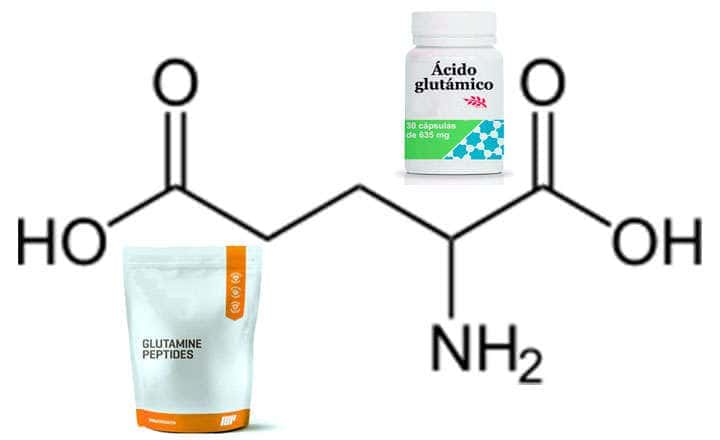
- It serves as a basis for protein synthesis.
- It regulates the acid-base balance in the kidney.
- It is a liver detoxifier necessary for the production of urea.
- It is essential for the transport of organic nitrogen.
- It functions as a nutrient for the immune system and the intestinal mucosa.
- It is a precursor of the antioxidant metabolite glutathione.
- It is beneficial for the pancreas, intestine, spleen, and stomach.
- It enhances the flavor of many foods.
Glutamic acid and glutamine
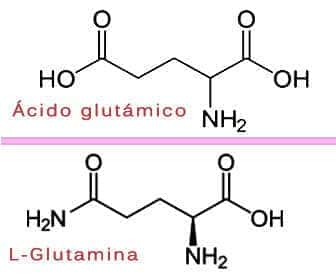 Glutamine is an amino acid derived from glutamic acid. In its chemical structure, the hydroxyl group of this acid must be replaced. It is also a non-essential amino acid, and the body can synthesize it through other molecules found in food. Large amounts are present in the muscles and the brain.
It is common to find glutamine or glutamic acid tablets in different online stores, nutrition stores, and places where health supplements are sold, and in some cases under the name L-glutamine. This is because in some cases it may be necessary to add it as an extra supplement to help prevent the loss of muscle fibers. That is, at certain times it can be very useful for supporting the muscles by slowing oxidative stress.
The body produces L-glutamine from L-glutamic acid, with the enzyme glutamate-ammonia ligase involved in the transformation. It obtains glutamine from the condensation of glutamate and ammonia.
So, is it necessary to take it?
At certain times and under certain training conditions, it may be important to add glutamine powder. In other cases, under medical supervision, it may be essential for maintaining health. But the important thing is to know the key moments when it can help strengthen the human body.


Very good information, thank you. I use glutamic acid for memory.
After a simple cold about 15 days ago, I have not been able to recover my normal vigor and desire to do things. I am about to turn 60 years old and I think andropause has arrived for me, little sexual appetite, but the most worrying thing is the lack of motivation in almost everything physical… Would this product from the article help me?
Friend, start with testosterone hormone replacement because you are going to get worse and worse.
Hello Rubén, the case has to be evaluated directly. Libido can decrease for different reasons, so it is necessary to investigate a little where it may be coming from, whether it is some physical or emotional disorder. Although in this case, glutamic acid is indicated for other situations.
If you see that you continue the same, mention it to the doctor in case they need to perform a checkup or blood test to see how your health is in general.
Glutamic acid is very good. My son, with ADD (Attention Deficit Disorder), complements his medical treatment with glutamic acid and I have had excellent results, because sometimes he has not taken it and the result is not the same with the medical treatment. It is a very good complement as a dietary supplement.