
The methanol is a chemical compound whose formula is obtained from hydrogen and carbon monoxide. Its characteristics and properties make it have a specific density suitable for many applications and uses although its handling must be carried out with extreme care since it has high toxicity.
Contents
What is methanol
Classified as a colorless liquid it is toxic it is known by the name “carbinol” and is used as burning alcohol. Methanol is a substance produced by chemical reactions when mixing carbon monoxide and hydrogen suitable for direct use or to obtain other chemical compounds such as ethyl alcohol.
Chemical properties and characteristics
The property of methanol that identifies it is that it is a liquid with a colorless appearance very irritating and dangerous as described in its safety data sheet. In addition to this we can indicate the following chemical properties:
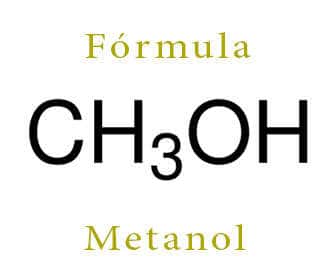
- Methanol formula: CH3OH(CH4O).
- Density: 791 kg/m3.
- Molecular (molar) mass: 32.04 g/mol.
- Boiling point: 64.7 °C.
- Acidity: ~15.5 pKa.
When it comes into contact with the mucous membranes of the human body it produces severe irritation so care must be taken to the extreme using protection when it is going to be used both at home and in the chemical industry.
Obtaining and production
In some cases it is produced from the distillation of wood through low temperature procedures. It is also possible to obtain methanol from the reaction between carbon monoxide and hydrogen suitable for use as car fuel and other machinery with combustion engines.
Uses of methanol
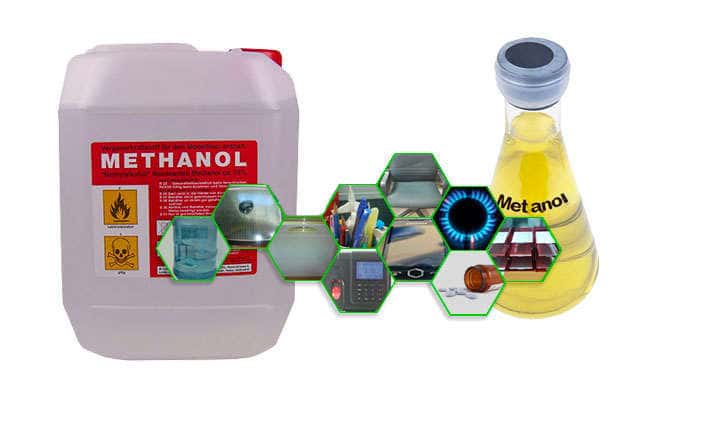
- As fuel.
- Antifreeze.
- Solvent.
- As burning alcohol.
- To produce methyl alcohol.
- For preservation.
Its preservative properties make it ideal for preserving organic tissues. It was widely used for a long time as an embalming agent for the dead in ancient Egypt together with other substances. In the early days its processing and obtaining was by producing wood pyrolysis but at present it is possible to synthesize pure methanol by wood distillation.
The uses of methanol as fuel have their origin in the substitution of petroleum. Many automobile manufacturers designed engines capable of operating with gasoline or methyl alcohol to provide a greater response to the demand for fuels that are easy to transport and purchase.
Its application as a solvent is to produce formaldehyde related in this aspect to ethanol and other industrial solvents. Also in dye factories paint production glues and adhesives.
Likewise due to its composition it is very easy to burn. It is classified as an alcohol so it works well to light stoves and fireplaces.
The methanol in the body is produced when there is an ethylene glycol poisoning. This slows the transformation through a chemical process of methanol toward formaldehyde and then proceeds to the formic acid formula. These substances being very toxic to health. Its metabolization is in the liver and it is broken down into other compounds that are also toxic to the human body and that of animals.
Methanol and water as fuel for cars
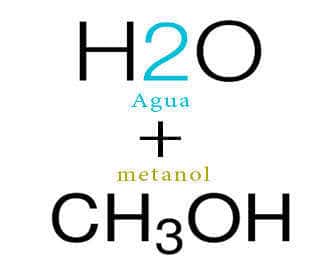 This mixture has applications for radio controlled cars. By adding methanol and water it is possible to increase the power of cars for children and for adult use in competitions on closed circuits.
The use is by injecting both substances to produce the so called “chemical intercooling” in the engine cylinder. The injection of water and methanol is very effective with an aerosol since in this way the evaporation of H2O produces heat that is absorbed to provide more octane to the fuel. Something that results in an increase in power of the radio controlled car.
Toxicity
As we have indicated this substance is very toxic so its ingestion must be avoided since it is harmful to health producing methanol side effects such as:
- Headache.
- Nausea.
- Dizziness.
- Vomiting.
- Severe reactions.
- Death.
- Blindness and eye damage.
- Optic neuropathy.
- Cirrhosis and other liver damage.
- Metabolic acidosis.
- Formic acidemia.
Attention must be paid to its storage avoiding that it is within reach of children and pets. Accidental consumption or penetration into the body is very harmful with doses starting from 20 ml. it can cause death.
It has an action on the central nervous system (CNS) causing different pathologies many of them very serious and permanent. Methanol poisoning is called “formic acidemia”.
Methanol poisoning
 Although it is infrequent in some cases the event occurs. It is important to go immediately to an emergency medical center to avoid its possible consequences and complications among which permanent neurological damage stands out.
Generally methanol poisoning appears when handling chemical products at work. As it is used to manufacture solvents and antifreeze the places where poisoning is most likely to occur are these in addition to accidents due to handling by inexperienced people or those who do not follow the measures indicated in the safety data sheet.
When it enters the body the so called metabolic acidosis may appear. This pathology must be treated immediately by a health specialist. The symptoms of methanol poisoning are:
- Intoxication.
- Dizziness.
- Headache.
- Disorientation.
- Irritation of the mucous membranes.
Early diagnosis is vital. Sometimes methanol and its symptoms take time to appear and these can be noticed from a few minutes after ingestion or inhalation up to 72 hours after contact with the substance.
Is methanol polar or nonpolar?
It is considered a polar protic solvent. The methanol is polar and can form hydrogen bonds with solutes. Aprotic solvents do not contain acidic hydrogens a characteristic that prevents them from forming hydrogen bonds.